
The Right Way to Remove a Tick
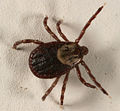
No matter how many times you've dealt with them, finding a tick on your dog, or worse on yourself is always a shock! You may not know this, but there is a right way and a wrong way to remove a tick. Removing them the wrong way increases your odds of getting whatever nasty disease that tick had been carrying.
If you should be so unfortunate as to find a tick attached to yourself or to your pet, here's the correct way to get rid of the nasty critter:
 Find something to remove the tick with. Good choices include tweezers (sterilized in alcohol
or by holding briefly in a flame), a tick removal device (available in
many sporting goods and pet supply stores), or as a last resort a paper
napkin or towel. I keep a tick remover in my home medicine chest and in my car for when I'm hiking or out with my dogs - they're not expensive and they make the job much easier.
Find something to remove the tick with. Good choices include tweezers (sterilized in alcohol
or by holding briefly in a flame), a tick removal device (available in
many sporting goods and pet supply stores), or as a last resort a paper
napkin or towel. I keep a tick remover in my home medicine chest and in my car for when I'm hiking or out with my dogs - they're not expensive and they make the job much easier.
Unless you have no other choice, do not try to remove a tick with your bare hands..
- Grasp the tick under the base of its body, close to your skin. If you're using a tick removal tool you can slide it right underneath the tick's body.
- Pull upwards with a firm but steady pressure until
the tick detaches.
This can take several seconds to a minute or two. Be patient - if you
pull too hard or too abruptly you risk breaking off the body and leaving
the tick's head lodged underneath your skin! If this happens, consult your
doctor (or your veterinarian) - not only does it increase your risk of getting a tick-borne disease, you can get a nasty infection besides.
- Kill the tick and if possible, put it in a secure
container, like a bottle or a zip lock plastic bag, so that
it can be tested to see what diseases you have been exposed to. Avoid
touching the tick with your bare hands.
- Consult your doctor or veterinarian for their recommendations on being tested for tick-borne diseases such as Lyme Disease, Rocky Mountain Spotted Fever (RMSF) and Ehrlichia.
Things NOT to do (i.e. the "wrong" way to do it):
- Cover the tick with nail polish or nail polish remover
- Soak the tick with oil or any other substance
- Hold a lighted match to the tick's body
These methods may sound appealing but they do NOT work. What's more, they're dangerous because they distress the tick. This may sound like a good thing, but a distressed tick is likely to regurgitate toxins into your body, passing any diseases it is carrying along to you.
Removing them by the slow and steady method we detailed above gives you the best chance of avoiding contact with any bacteria the tick might transfer, especially if it was only attached for a short period of time.
See also: How to prevent tick bites